By Gerry Palmer
The word slave comes from Medieval Latin; originally, it was a term for the Slavic peoples, many of whom were enslaved during the early medieval period. Although the first written mention of slavery appears in one of the earliest legal codes—the Code of Hammurabi (c. 1760 BC)—archaeological evidence suggests the practice is far older, dating back at least to ancient Sumer some 5,000 years ago.
Before focusing on the more local aspects of slavery, there are a few shocking (and one encouraging) facts to note. The number of people living in modern slavery today is uncertain, though estimates are vastly higher than once thought, with global organisations placing the figure in the tens of millions. Between 30% and 40% of the population in some ancient Greek city-states may have been enslaved, while estimates for the Roman world suggest around 10–20% of the population were enslaved at various times. The Roman Empire has been estimated as enslaving around 100 million people over its history. The Atlantic slave trade forcibly transported approximately 12 million Africans, of whom British ships carried around 3.1–3.4 million. The Arab slave trade is estimated to have involved up to 18 millions over more than a millennium. In addition, around 1 to 1.25 million Europeans were enslaved by Barbary pirates between the 16th and 19th centuries, including some taken in raids on British and Irish coastal communities.
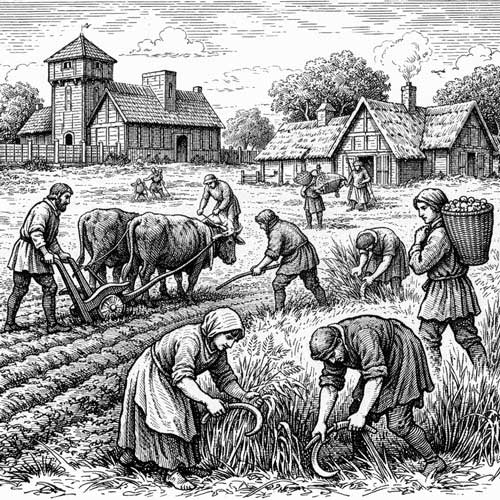
In Domesday England, around 10% of the population were recorded as slaves. However in Marlow there were just five slaves out of a recorded population of 107. Well done, Marlow!
There are two known early records relevant to local slavery from this period: the Domesday Book and the will of Saint Ælfgifu of Shaftesbury. Ælfgifu was likely either the former wife or close relation of King Eadwig, who ruled England until 959 AD. In her will, she appears to request that her penal slaves be freed upon her death, although this may have applied only to her estate near Princes Risborough.
In 1086, Buckinghamshire’s recorded population in Domesday Book was approximately 5,103, of whom 845 were listed as slaves (servi). Buckinghamshire had one of the highest proportions of slaves in southern England.
| County | % Slaves |
| Bedfordshire | 13.4 |
| Berkshire | 2.9 |
| Buckinghamshire | 16.6 |
| Essex | 12.9 |
| Hertfordshire | 13.0 |
| Kent | 9.9 |
| Middlesex | 5.1 |
| Northamptonshire | 9.5 |
| Oxfordshire | 14.9 |
| Surrey | 12.3 |
Slavery appears to have been declining since the time of King Alfred, nearly 200 years earlier, possibly due in part to the greater proportion of free peasants in areas influenced by Danelaw traditions. Most slaves were owned by lay landholders, while the Church owned somewhat fewer—around 10% of recorded slaves. Surprisingly, William the Conqueror and the Crown owned an even smaller proportion, although this may reflect the distribution of estates to his followers after the Norman Conquest.
Most slaves appear to have worked in agriculture, often as ploughmen, although women and children were also enslaved, typically in domestic roles such as household servants or dairy workers.
| Place | Population | No. of Slaves |
| Marlow | 107 | 5 |
| Long Crendon | 77 | 10 |
| Haddenham | 68 | 9 |
| High Wycombe | 60 | 8 |
| Princes Risborough | 45 | 3 |
| Monks Risborough | 44 | 4 |
| Bledlow | 43 | 8 |
| Aylesbury | 36 | 2 |
| Great Kimble | 36 | 6 |
| Brill | 34 | 2 |
| Chalfont St Giles | 24 | 4 |
| Taplow | 24 | 2 |
| Eton | 23 | 4 |
| Chalfont St Peter | 20 | 2 |
| Tingewick | 15 | 10 |
| Little Kimble | 13 | 2 |
| Ibstone | 12 | 4 |
| Dorney | 11 | 2 |
| Farnham Royal | 10 | 2 |
But when did slavery finally end in Britain? Not, as many people believe, with William Wilberforce’s Act of 1807. That law abolished the slave trade in the British Empire, not slavery itself.
Slavery had been restricted or condemned several times before. The buying and selling of slaves was prohibited in England in 1102 by the Council of London, although this did not end slavery outright. Over time, slavery gradually disappeared in medieval England, largely dying out by the 12th century and being replaced by serfdom. The famous 1772 Somerset judgment ruled that slavery was unsupported by English common law and many took this to mean that enslaved people could not be forcibly removed from England.
However, slavery itself was not fully abolished across most of the British Empire until the Slavery Abolition Act of 1833, which came into effect in 1834.
One famous earlier legal statement claimed that England was “too pure an air for a slave to breathe in” – which was taken to mean that as a slave entered England he or she became free, The phrase is often associated with legal commentary from the reign of Elizabeth I, though its exact legal authority is debated. Nevertheless, it became an enduring symbol of England’s growing opposition to slavery.
It almost makes you proud.